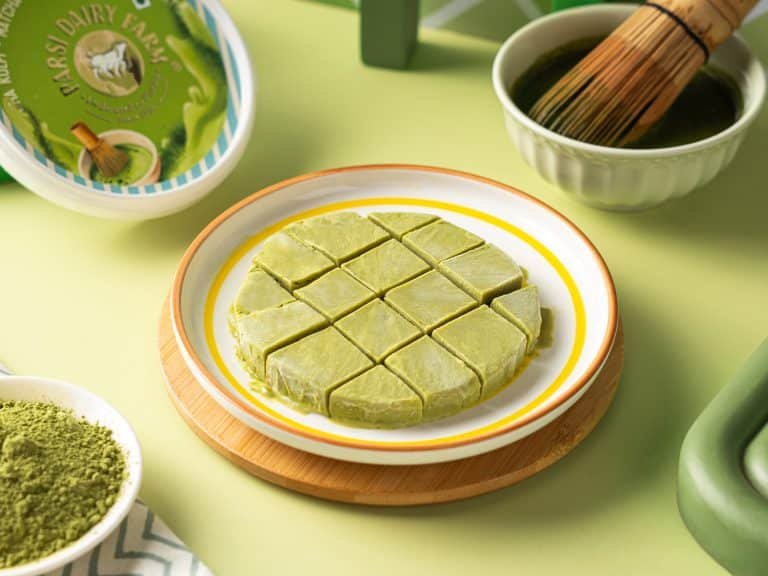
A century-old Indian dairy favourite has just received a modern, global twist. The iconic Parsi Dairy Farm in Mumbai — known for its creamy slow-set kulfis — has introduced an innovative new flavour: Matcha Kulfi. This fusion dessert blends the earthy, vibrant green tea powder matcha (originally from Japan) with the rich, dense dairy base of India’s traditional frozen treat.
The new flavour combines premium ceremonial-grade matcha with the deeply reduced whole-milk foundation that is characteristic of kulfi, producing a dessert that’s both visually striking and distinct in taste. The slight bitterness and vegetal depth of matcha cuts through the sweetness and richness of the dairy, creating a balanced profile that’s both refreshing and sophisticated — a contrast to many standard sweet kulfi flavours.
This creative hybrid reflects a broader trend in India’s food scene, where traditional dishes and desserts are being reimagined with global influences while remaining anchored in local culinary craftsmanship. While classic flavours like malai, mango, kesar-pista and sitaphal continue to be favourites, experimental versions like matcha-inspired kulfi are gaining attention in urban cafés and dessert counters.
Matcha itself has become a significant flavour trend across India’s hospitality and café culture, often appearing in beverages, ice creams, cheesecakes and more — driven by a mix of wellness appeal, rich antioxidant content, and its striking green hue that resonates well on social media.
For the Parsi Dairy Farm — a brand with roots going back over a century — offering Matcha Kulfi is a bold step that bridges generations: preserving traditional slow-simmered dairy methods while embracing a global ingredient that resonates with younger, experience-driven consumers. It’s a tasty example of how heritage and contemporary tastes can come together in a single scoop.